Indian state bans beef, introduces jail time for possession


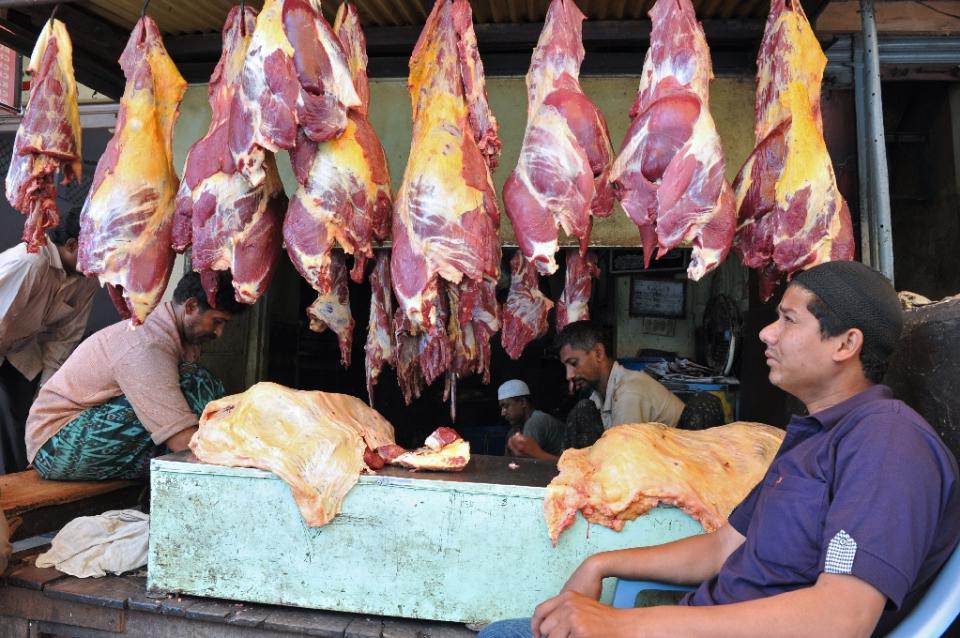
India's western state of Maharashtra has introduced a ban on beef so strict that even possession could land you in jail for five years, media reports and the chief minister said Tuesday.

The country's Hindu majority considers cows sacred, and several states already ban their slaughter.

But the latest measures in Maharashtra -- home to India's commercial centre Mumbai -- go even further, making the sale or possession of beef an offence punishable by a five-year jail term or a 10,000 rupee ($160) fine.

The Indian Express newspaper said the measures became law after President Pranab Mukherjee gave his assent to a legal amendment -- which was passed by the state parliament two decades ago, but was never sent to a president for approval.

The measures include a ban on the slaughter of bulls and bullocks, hitherto legal with a vet's certificate, although it will still be legal to slaughter buffalo.

Maharashtra's chief minister Devendra Fadnavis tweeted his thanks to the president, saying "our dream of ban on cow slaughter becomes a reality now".

The ban didn't go unnoticed and led to an acrimonious debate on the social media with #BeefBan top-trending on India's twitter.

"In Maharashtra, all chicken, goats and sheep are currently thinking -- Why should gais (cows) have all the fun? #BeefBan," Ramesh Srivats said on Twitter.

The decision led to many angry exchanges on social media with people on different sides of the divide citing personal freedom, religious beliefs, history, environment and even animal rights to make their point.

Many took snarky jibes at the local state government for its decision. "And in other news, safer to be born a cow than a girl in India," Sonika Mehta said on Twitter.

However there were many who came out in open support of the government's ban.

"No problems with #BeefBan whatsoever. Totally support it," Twitter-user Shivani Sahay posted.

Right-wing Hindu groups in India have long demanded a complete ban on the slaughter of all cattle, citing religious scriptures.

The main players in the beef industry are Muslims, the country's largest religious minority, who make up some 13 percent of India's 1.25-billion population.


Maharashtra state is ruled by Prime Minister Narendra Modi's Hindu nationalist Bharatiya Janata Party in alliance with the far-right Shiv Sena party.

Source: http://news.yahoo.com/indian-state-bans-beef-introduces-jail-time-possession-141749373.html

Majority of Americans now support marijuana legalization, survey shows


Pot prohibition is going up in smoke.

Researchers asked 1,680 people whether they thought marijuana should be made legal.

According to the General Social Survey (GSS), which is considered the nation’s most reliable, 51.7 percent said they supported legalization and 41.7 percent said they opposed it, while 6.6 percent were undecided.

“We’ve been measuring public attitudes toward legalization of marijuana since the ’70s,” Tom W. Smith, director of the GSS, said in an interview with Yahoo News. “In 2012, you had a plurality of Americans against legalization. Now, in 2014, you have a majority in favor of legalization.”

The Washington Post, which first reported on this new data, points out that the drastic change resembles America’s evolving opinion on gay marriage — and there has been a drastic change in the past few years.

Smith notes that the percentage of undecided respondents on the question of marijuana has been relatively high over the past decade.

“It shows how attitudes are in flux. They’re just not sure,” Smith said. “They might think medical marijuana is OK but not further than that.”

He suggested that some Americans may need to weigh the longstanding reputation of cannabis as a gateway drug with the reality of recreational use in Colorado, Washington State, Alaska, the District of Columbia and (this July) Oregon.

Back in 1973, the first year of the survey, only 19.2 percent of Americans supported legalization. That figure bottomed out at 15.6 percent in 1987 but has climbed more or less steadily ever since.

Morgan Fox, communications manager for the Marijuana Policy Project, says that Americans are tired of laws that punish adults for enjoying a substance that many argue is safer than alcohol.

"Hopefully their elected officials are paying attention and preparing for the inevitable," Fox said in a statement. "The failures of marijuana prohibition are too obvious to ignore forever, which is evidenced by the growing support for ending it."


GSS is an in-person survey of adults, who speak either English or Spanish, living in households in the United States.

Source: http://news.yahoo.com/majority-of-americans-support-marijuana-legalization-for-first-time--survey-shows-211700847.html

The real story of how a Dallas nurse got Ebola could be worse than we ever imagined


(Youtube) Nina Pham, the "Dallas Ebola nurse," in an October 16 video. On Oct. 16, 2014, Texas Health Resources released a grainy video of Nina Pham, a nurse at one of the company's Dallas hospitals who had contracted Ebola while caring for the first person diagnosed with the virus in the US.
Her patient, Thomas Eric Duncan, had died about a week earlier, two days before Pham woke up with a fever.

In the video, Pham, 26, is sitting up in a hospital bed, quiet at first.

"Thanks for being part of the volunteer team to take care of our first patient," says a male voice, off-camera. " It means a lot. "

She nods.

Now, in a lawsuit filed Monday in Dallas, Pham alleges that the video was an "ambush" and that her Ebola infection was a direct result of the "gross negligence" of her employer, Texas Health Resources.

Pham, the suit alleges, was "a symbol of corporate neglect — a casualty of a hospital system's failure to prepare for a known and impending medical crisis."

While the hospital has had spokespeople telling its version of events for months, the lawsuit offers the first look at how the unthinkable happened, from the perspective of the first person to contract Ebola on US soil. Texas Health Resources is expected to contest this account.

'She did not volunteer'
On Aug. 5, the Centers for Disease Control and Prevention held its first conference call to help clinicians prepare for the possibility that Ebola would show up in their hospitals. By then, the Ebola outbreak in western Africa was already historic in scale, and two Americans had been sent to the US for treatment.


By September, the lawsuit alleges, "the CDC and the American Hospital Association warned [Texas Health Resources] that Ebola was an imminent threat and that healthcare provider training and policies should be adopted... as well as safe protocols for personal protective equipment to protect health care workers."

The first time Thomas Eric Duncan showed up at the Texas Health Dallas Presbyterian Hospital in late September, he was sent home. Days later, when his condition had worsened and Ebola was suspected, he was admitted to the ICU. "Nina was told the patient would be hers," the lawsuit alleges.

From the suit:

Nina was shocked. She had never been trained to handled infectious diseases, never been told anything about Ebola, how to treat Ebola, or how to protect herself as a nurse treating an Ebola patient. The hospital had never given her any ... training or guidance about Ebola. All Nina knew about Ebola is what she had heard on television.
According to the petition filed with the court, when Pham "asked her manager what she should do to protect herself," one of her superiors "went to the internet, searched Google, printed off information regarding what Nina was supposed to do, and handed Nina the printed paper."

Given that sequence of events, the suit alleges, it's clear "she did not volunteer to be his nurse." Still, she treated him when asked.

'More like a third world country'
View gallery
.nina pham ebola nurse
(Yuri Gripas / Reuters) A member of the audience wears a sticker in support Texas nurse Nina Pham during the House Oversight and Government Reform Committee hearing to "examine the federal government's response to the Ebola virus in the U.S."
Before entering Duncan's room, Pham learned what she could from the internet. Ebola is transmitted via body fluids like blood, vomit, and diarrhea, all of which are often produced in excess as the virus progresses. Casual passersby are not likely to have close contact with these substances, but for caretakers and nurses, they are difficult to avoid.

So Pham took several precautions, according to the lawsuit: an isolation gown, double gloves, surgical mask, and booties. But her hair and neck were left uncovered. The suit also alleges that because the hospital did not give her disposable scrubs or other clothes, "she had to wear the scrubs she wore that first day home, taking out of the hospital clothing that was potentially carrying the virus."


There was no reason she should have had to treat Duncan with so little training and preparation, argued Brent Walker, Pham's lawyer, in an interview with Business Insider. "T he hospital had equipment it could have used, but she was never given it, never told about it," he said, adding that the hospital for some reason didn't immediately seek additional guidance from the CDC or a more prepared facility. "The only thing [Pham] was told was that she was getting an Ebola patient."

While Pham was scared, she believed — the petition to the court alleges — that her employer "would not put her in any situation that was as dangerous as she feared."

According to the lawsuit, the nurses talked among themselves, pooling what they'd learned and heard from friends in other hospitals. "They were literally trying to guess as they went," Walker said.

But the suit alleges that they faced "circumstances ... that were more like what one would expect in a third world country." With no designated teams to dispose of all the biohazardous waste that accumulates with an Ebola patient, the nurses tied up Duncan's soiled sheets, where they piled up in the room next to Duncan's. They poured bleach on contaminated materials and wrapped dirty sheets inside of clean ones, according to Walker.

That telling — of a haphazard approach to care — seems to contradict statements made by Dan Varga, Texas Health Resources' chief clinical director, at the time Pham's infection was first made public. The nurse was "following full CDC procedures," he told reporters . "We're very concerned."

Amber Vinson, a Dallas nurse who also treated Duncan and got Ebola soon after Pham, told CNN that she "followed the CDC protocol" and "never strayed." Still, she added, "We weren't the best prepared ... We did not have extensive training. We did not have a level of feeling comfortable with putting on and taking off the protective equipment. We didn't have the time to practice it."

'No risk'
View gallery
.Dallas, Texas Ebola
(REUTERS/Jim Young) A worker in a hazardous material suit is sprayed down by a co-worker after coming out of the apartment where Thomas Eric Duncan had stayed.
When Duncan died, the lawsuit says, Pham "was heartbroken. The hope that she could save her patient was the one thing that had kept her going through the stress of the situation and fear that she had of the virus."

Soon after, the lawsuit alleges, something strange happened. Pham was called into a meeting with an occupational health manager from the hospital and a CDC representative. She "was told that the [personal protective equipment] she wore was safe and that she was 'no risk' of having contracted Ebola," according to the lawsuit. (Asked to verify what was said at this meeting, a CDC spokesperson told us the agency "does not comment on pending lawsuits.")

Pham had assumed that in spite of her best-guess precautions, she was at some risk, given her alleged lack of training and ongoing close contact with a highly infectious patient. After that meeting, though, according to the suit, she felt confident "that she could freely see her friends and family."

Two days later, Pham woke up with a fever.

On her way to the hospital, she asked to be admitted as a "No Information" patient, the lawsuit alleges. That would provide an additional level of privacy protection and hide her name in her medical record; she "did not want anyone to know that she might be sick with Ebola," according to the suit.

Her diagnosis was confirmed late that night. With the memory of Duncan's painful death still fresh in her mind, the lawsuit says, Pham was deeply afraid.

'Damage control'
View gallery
.nina pham ebola nurse
(YouTube / Screenshot) Pham appears to wipe tears from her eyes during the video originally released by Texas Health Resources.
Meanwhile, Texas Health Resources was under fire. Dallas Presbyterian was facing scrutiny and criticism for turning Duncan away when he first showed up to the ER. Varga, the chief clinical officer, was preparing to testify before a Congressional committee to publicly apologize. "We made mistakes," he said. "We are deeply sorry."

The subsequent infections of Pham and Vinson made the hospital chain look even worse.

That's why, the lawsuit alleges, they "began PR damage control to try to combat the growing distrust in the core competency of THR's hospital... [its] brand and its revenues were tanking... THR began trying to use Nina as a PR tool."

The PR department called Pham while she was in isolation and "heavily medicated," according to the suit. They released an announcement updating her condition from "stable" to "good," even as doctors told Pham's mother that was not accurate.

A note from a pulmonologist, cited in the lawsuit, seems to show that doctors were having end-of-life discussions with Pham while they were also jockeying for the ability to release more information about her to the public — on behalf of the hospital's PR team, the lawsuit suggests. Here's the note from Pham's medical records, via the suit:

Discussed with her and reviewed in detail the consent form for release of information and she agrees to increased information release

Also discussed End of Life issues with her and of now she desires all levels of support. We agreed to discuss this again

The lawsuit calls the Oct. 16 video, made on the day Pham was being transferred to the National Institutes of Health for treatment, "the act most indicative of THR's callousness in the pursuit of good PR."

While the video shows Pham being quiet and teary, she also manages an upbeat "I love you guys" and says "Come to Maryland everybody." The overall reception to the video was surprise that she seemed to be in relatively good shape. But the lawsuit casts those statements as carefully coaxed out of her by a doctor wearing a GoPro, after she initially "did not give the answers THR was looking for."


"Never once did THR get Nina's permission to be used as a PR pawn like this," the lawsuit alleges. In its "focus on growth, cost control, and branding a sterling image," the company "used [Pham] when she was in the darkest moment of her life, all for THR's own benefit," the suit alleges.

Texas Health Resources directly contests that allegation. "THR was sensitive to Nina’s privacy, and we adhered to HIPAA rules in determining what information to share publicly," CEO Barclay Berdan wrote in an email sent to employees and shared with Business Insider. "We had Nina’s consent to share the information about her that was released."

'Sad it had to come to this'
View gallery
.nina pham ebola nurse with obama
(Larry Downing / Reuters) President Obama met Pham shortly after her release from the NIH, where she was treated for Ebola.
Eventually, Pham was released from the NIH Ebola-free.

According to her lawyer, she's still dealing with some after-effects of the virus and the four experimental treatments she received. Her symptoms, Walker says, include lethargy, weakness, liver problems, and hair loss. She's on "the equivalent of sick leave" from the hospital, and while she hopes to use her expertise to help other nurses, she will not likely return to clinical nursing.

"It was such a traumatic experience she can’t imagine walking back into the hospital," Walker told us. "This is a 26-year-old who thought she was going to die a horrible gruesome death."

Meanwhile, Texas Health Resources released a statement in response to the suit. "Nina Pham served very bravely during a most difficult time as we all struggled to deal with the first case of Ebola to arrive in a US hospital’s emergency room. Texas Health Resources has a strong culture of caring and compassion, and we view all our employees as part of our family," said Wendell Watson, a spokesperson for Texas Health Resources in the statement. "That’s why we have continued to support Nina both during and after her illness, and it’s why she is still a member of our team. As distressing as the lawsuit is to us, we remain optimistic that we can resolve this matter with Nina."


As for Pham, she's focusing on her health, she told The Dallas Morning News. "It’s kind of a relief now that the lawsuit is filed," she said, "but it’s still sad it had to come to this."

Source: http://news.yahoo.com/real-story-dallas-nurse-got-232919860.html
US billionaire says WWII Japanese ship found in Philippines


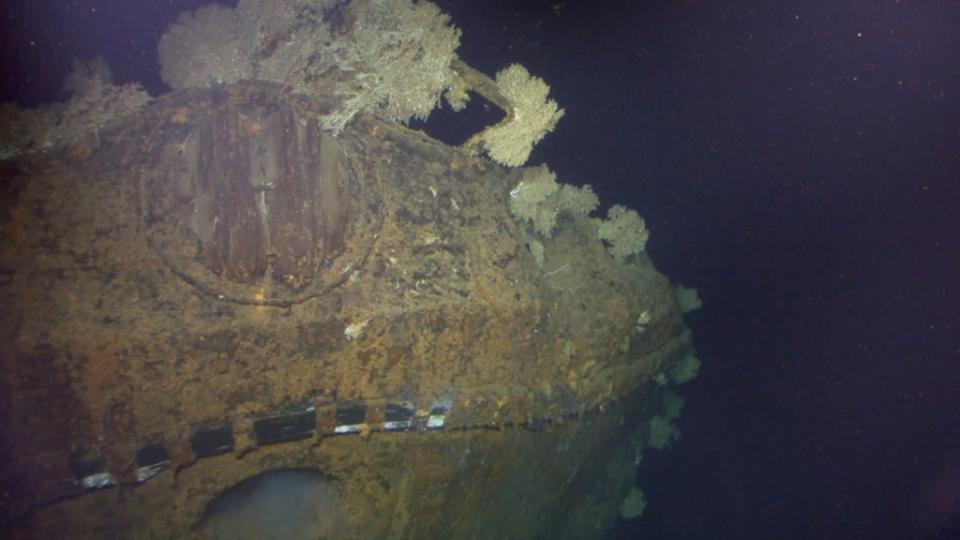
Manila (AFP) - Microsoft co-founder Paul Allen said Wednesday he had found one of Japan's biggest and most famous battleships on a Philippine seabed, some 70 years after American forces sank it during World War II.

Excited historians likened the discovery, if verified, to finding the Titanic, as they hailed the American billionaire for his high-tech mission that apparently succeeded after so many failed search attempts by others.

Allen posted photos and video online of parts of what he said was the battleship Musashi, found by his M/Y Octopus exploration vessel one kilometre (0.62 miles) deep on the floor of the Sibuyan Sea.

"World War II battleship Musashi sank 1944 is found," Allen announced in a Twitter post that has been re-tweeted close to 19,000 times.

The discovery was the end of an eight-year search for the Musashi, backed by historical data from four countries and using "advanced technology" that surveyed the seabed, Allen said in a statement on his website.


"I am honoured to play a part in finding this key vessel in naval history and honouring the memory of the incredible bravery of the men who served aboard her," Allen said.

Undersea footage on Allen's website showed what were described as a valve, a catapult for planes, a gun turret and a starboard anchor.

View galleryA wheel on a valve believed to be from a lower engineering …
A wheel on a valve believed to be from a lower engineering area of the World War II Japanese battles …
It also showed the space on the bow for the Japanese empire's Chrysanthemum seal.

This is a unique feature of the three biggest warships that Japan built during World War II, according to Kazushige Todaka, director of the Kure Maritime Museum in Japan.

- 'Destiny' -

"I'm almost certain that what was discovered is the battleship Musashi," he said, adding the find had huge historical importance.

"There have been so many efforts over the years to locate Musashi, but they all failed. I feel like the warship might have been destined to show itself this year -- the 70th anniversary of the end of World War II," Todaka said.

"With the memory of war slipping further and further from people's minds, I hope this discovery will help make the public think about history."

View galleryThe bow of the World War II Japanese battleship Musashi …
The bow of the World War II Japanese battleship Musashi after it was found in Sibuyan Sea, Philippin …
Manolo Quezon, a prominent historian in the Philippines and the presidential communications undersecretary, also said the Musashi wreck would be a "major" historical find if verified.

"This would be like finding the Titanic, because of the status of the ship and the interest on the ship," Quezon told AFP.

The Musashi was one of a trio of vessels built by Japan during the war that, at 263 metres (863 feet) each, were its biggest battleships ever.

American warplanes sank the Musashi on October 24, 1944, at the height of the Battle of Leyte Gulf, regarded as the largest naval encounter of the war in which US and Australian forces defeated the Japanese.

Dozens of Japanese warships that were sunk during World War II have since been found in the Philippines, with some of them now popular dive locations.

The Sibuyan Sea where the Musashi was reportedly found is at the heart of the Philippines' central Visayas islands, and is home to busy shipping lanes.


- Multi-dimensional billionaire -

The Seattle-born Allen, 62, who founded Microsoft with Bill Gates in 1975, is the world's 51st richest person with a net worth of $17.5 billion, according to Forbes Magazine.

He is also a famous philanthropist and businessman with a focus on innovation.

Allen is working on a project called Stratolaunch, which aims to put "cost-effective" cargo and manned missions into space.

He launched SpaceShipOne, the first privately built spacecraft, into sub-orbital space in 2004.

In Allen's statement on his website, he said he been driven to pursue the Musashi for many reasons.

"Since my youth, I have been fascinated with World War II history, inspired by my father's service in the US Army," he said.


"The Musashi is truly an engineering marvel and, as an engineer at heart, I have a deep appreciation for the technology and effort that went into its construction."

Source: http://news.yahoo.com/us-billionaire-says-wwii-japanese-ship-found-philippines-063105060.html

Mark Lippert, U.S. Ambassador to South Korean, attached


U.S. Ambassador Mark Lippert was slashed on the face and wrist by a man wielding a blade and screaming that the rival Koreas should be unified, South Korean police said Thursday.

Media images showed a stunned-looked Lippert staring at his blood-covered left hand and holding his right hand over a cut on the right side of his face, his pink tie splattered with blood.

The U.S. State Department condemned the attack, which happened at a performing arts center in Seoul as the ambassador was preparing for a lecture, and said Lippert was being treated at a local hospital and his injuries weren't life threatening.

YTN TV reported that the man — identified by police as a 55-year-old, surnamed Kim — screamed during the attack, "South and North Korea should be reunified."

The suspect also shouted anti-war slogans after he was detained, and Seoul police say the weapon used had a 25-centimeter blade. (AP)

Source: http://news.yahoo.com/photos/mark-lippert-u-s-ambassador-to-south-korea-attacked-slideshow/us-ambassador-south-korea-mark-lippert-injured-attack-photo-002113949.html

5 Big Ways to Make Your Micro-Video Stand Out

Video micro-content might have seemed like content marketing’s embarrassing little brother at some point — cute yet inconsequential. But times have changed. As smartphone use has ballooned and attention spans have narrowed, creating entertaining clips around a brand’s products or services is becoming increasingly common.
At the same time, success isn’t guaranteed. In a recent 2015 outlook, marketing firm MillwardBrown noted that only the most savvy brands will excel at video micro-content.
“Ads on these platforms must be immediately captivating and entertaining, as consumers on these sites expect creativity,” the firm wrote.
Related: 4 Tips for Hiring a Great Video Production Company
With that in mind, here are five elements any winning clip-based video campaign should prioritize this year.
  1. Determine the platform
In this post, we’ll focus on three popular video micro-content platforms: Vine, Instagram and Tout.
Admittedly, the word “popular” is something of an overstatement. The Content Marketing Institute recently reported only half of B2C marketers, and one out of every four B2B marketers use Instagram. Meanwhile, just one-fifth of B2C marketers and one-tenth of B2B marketers use Vine.
Thus, opportunity awaits marketers who are willing to carve out a niche in this space.
Vine is Twitter’s answer to video micro-content and features looping six-second clips brands can use to tell a concise story. In one recent animated Vine from Samsung Mobile US, the company’s Gear S wearable smartwatch takes on the big city:
Instagram is likewise affiliated with social networking behemoth Facebook and permits videos up to 15 seconds. In 2014, Adidas and Champs Sports paired up to make a successful multi-part video series for Instagram called #adicolorTV, which featured professional athletes, rappers and more.
Finally, Tout continues to enjoy a fan following among individuals, celebrities and news media. The Wall Street Journal, for one, actively creates and shares short video clips (up to one minute) from Central Park to Shanghai.
Related: How to Effectively Use Advertising in Online Videos
To choose which of these three platforms makes sense for your audience, spend time on each platform. Review innovative campaigns such as those above to assess factors such as clip content, length and positioning. In many cases, it makes sense to try each platform simultaneously to determine which will resonate best with your target viewership.
  1.  Craft winning content
Once you identify which platform(s) to use for your next micro-content video campaign, decide what type of content you should create.
For short video bursts, humor works extremely well, noted panelists at a recent Reel Summit video marketing conference.
Also consider the audience you’re targeting. Younger consumers who haven’t yet made up their mind about your brand are probably much more willing to share a gag clip or visually compelling montage than older consumers who simply got an Instagram profile to see photos of the grandkids.
Meanwhile, if you take the news angle popular among some Tout users, offer to take viewers behind the scenes of your brand. Do you build widgets? Show off the widget factory or do a mini interview with someone who is integral to the process of creating your products.
  1. Capture artfully
Take advantage of the editing suite at your disposal. All three platforms enable users to record video in chunks as opposed to a single block of video. That permits brands with the appropriate time and resources to create innovative stop-motion animation in addition to plain old video. Clips can be rearranged and tightened as needed.
Be sensitive to the background in your video as well as sound. Vine recommends users try headphones with a built-in microphone to capture audio that isn’t full of clutter. It also advises tripods for high-caliber clips, though the beauty of shooting video with any of these three platforms is the ability to quickly capture and turn around content for a mobile audience.
If your brand has a video studio and the right connections, getting celebrity users of your products or services to participate in a campaign might be a real possibility. Do a little leg work and you might be rewarded with viral content at a lower cost relative to other channels.
To quote Facebook founder Mark Zuckerberg: “If you look in the future a lot of the content that people share will be video. It’s just very compelling.”
  1. Disseminate effectively
Another benefit of producing video micro-content is the ease with which brands and consumers can share the content. Instagram offers some basic-but-great guidelines for effective distribution: including:
Always use hashtags when posting content to the web
Use a compelling cover photo to anchor any packaged micro video content on your respective platform
Bblend video with other media you already produce, including photos, to create a seamless brand message?
Use in-house events or trending topics to frame content creation and improve the odds it will be shared?
Tout adds that text overlays and narration can add context to clips. After all, we’re more likely to share content that we can easily understand and appreciate.
Related: Determining the Right Kind of Video for Your Message
  1. Plan ahead to win
As with any brand marketing strategy, planning is the key to finding success. Do the research to know your audience and then be proactive about working video into your content calendar, advises contributor John Rampton.
Also remember organic video isn’t the only option available. For 2015, Twitter has announced paid solutions for marketers who want to distribute clips on a cost-per-view basis.

Remember: Short video sells, and with 1 billion smartphones expected to be sold by this year, it makes sense to get all your creativity in front of that captive audience.

Source: http://www.entrepreneur.com/article/243465

Australians on Indonesia death row arrive on execution island

Two Australian drug smugglers in Indonesia were transferred Wednesday to an island where they will be executed, as the Australian leader said his country was "revolted" by their looming deaths after frantic diplomatic efforts to save them.

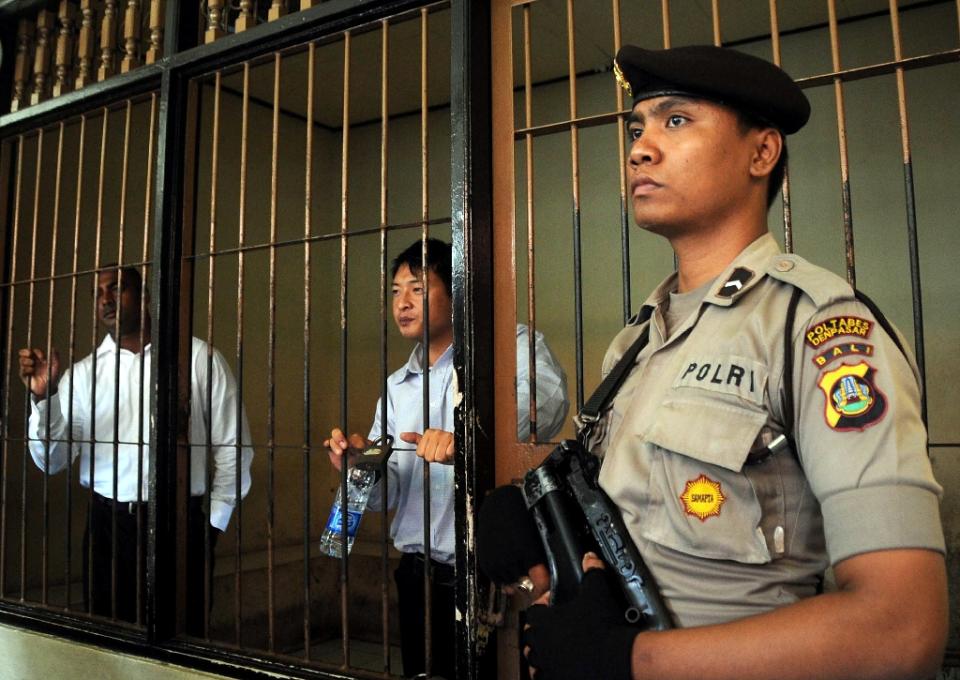
Andrew Chan and Myuran Sukumaran, the ringleaders of the so-called "Bali Nine" drug smuggling gang, were woken and given a few minutes to get ready before leaving Bali's Kerobokan jail in the early hours, said local justice ministry official Nyoman Putra Surya.
The men, sentenced to death in 2006 for trying to smuggle heroin out of Indonesia, said "thank you" before leaving, and "we handcuffed them and they were quiet", he added.
Michael Chan attempted to see his brother Andrew before the transfer but prison officials denied him entry, with Surya saying the decision was taken because "today is not visiting day".
About 200 police, 50 soldiers and a water cannon were stationed outside the Bali prison as the men, in their early 30s, were driven out.
The pair were flown to Cilacap, on Java island, on a chartered commercial flight accompanied by military aircraft.
View galleryA supporter of two Australian drug smugglers on death …
A supporter of two Australian drug smugglers on death row lights candles for a vigil outside Kerobok …

Two armoured vehicles escorted by elite police then boarded a boat at the local port which crossed to Nusakambangan island, home to several high security prisons and where the pair will be executed, an AFP reporter at the scene said.
The men recently lost their appeals for presidential clemency, typically a death row convict's last chance to avoid the firing squad. Officials have yet to announce a date for their executions, but the transfer indicates it is imminent.
Attorney-General Muhammad Prasetyo said Wednesday that final preparations, such as training the firing squads, were still being made before a date could be set for execution of the Australians and several other drugs offenders.
Authorities must give convicts 72 hours notice before they are executed. Convicts from France, Brazil, the Philippines, Nigeria and Ghana also recently lost appeals for clemency, and speculation is mounting over whether they will be included in the next round of executions.
- 'Sick in their guts' -
View galleryAn Indonesian police vehicle, used to transfer two …
An Indonesian police vehicle, used to transfer two Australian drug smugglers on death row, leaves Ke …

Prime Minister Tony Abbott, who has repeatedly called for Jakarta not to go ahead with the executions, said Australians were sickened by the developments.
"We frankly are revolted by the prospect of these executions," he said, adding that "right now millions of Australians are feeling sick in their guts".
Abbott said he hoped there might be a "change of heart in Indonesia", but added: "What I don't want, though, is to hold out false hope."
However, he added: "I hope that even at this late hour, the better angels of the Indonesian peoples' nature will reassert themselves".
Foreign Minister Julie Bishop told parliament in Canberra she had spoken with the families of Chan and Sukumaran and they were "devastated", while Attorney-General George Brandis said the government had made at least 22 representations to Indonesian officials since January.
View galleryAngelita Muxfeldt (L), cousin of Brazlian prisoner …
Angelita Muxfeldt (L), cousin of Brazlian prisoner Rodrigo Gularte, and Sabine Atlaoui (R), wife of  …
President Joko Widodo has been unswayed by the barrage of international appeals, insisting that Indonesia is facing an "emergency" due to rising narcotics use, and Prasetyo reiterated the government's tough line.

"We want to... send a message to all parties and to the international community that Indonesia is working hard to battle drug crimes," he said.
The Australians are among a group of 10 drug convicts expected to face the firing squad in the upcoming batch of executions.
Indonesia executed six people, including five foreigners, in January, sparking a diplomatic storm as Brazil and the Netherlands -- whose citizens were among those put to death -- recalled their ambassadors.
Officials have said that gathering convicts on Nusakambangan is the final stage before the executions. Some are already on the island.
The Australians' lawyers have launched a series of last-ditch legal bids to try and stop the executions, and have urged authorities not to go ahead with the executions while the legal process is still ongoing.

Brazil and France have also been ramping up pressure, with Paris summoning Indonesia's envoy and the Brazilian president refusing to accept the credentials of the new Indonesian ambassador.
The family of the Brazilian, Rodrigo Gularte, say that he has been diagnosed as a paranoid schizophrenic and should be in a psychiatric facility.

The Frenchman facing execution, Serge Atlaoui, has also applied for a judicial review of his sentence, and his wife said last week he was hopeful of success.

Source: http://news.yahoo.com/australians-indonesia-death-row-leave-execution-island-afp-225140940.html

Pacquiao big hit so far in Vegas sports books vs Mayweather

LAS VEGAS (AP) — Manny Pacquiao has always believed he can do what 47 other fighters before him have failed to do — beat Floyd Mayweather Jr. in the ring.
Turns out a lot of other people are believers, too. And they're backing their opinions with real money.
A flurry of early action on Pacquiao has already narrowed the odds for the big fight in this city's legal sports books. By the time they get into the ring May 2, it's conceivable that Mayweather might not be favored at all.
"I've never seen Mayweather this low eight weeks out before the fight," said Jimmy Vaccaro, who has booked money on every big fight for the past four decades in Las Vegas. "This is as close as we get to a legitimate pick 'em fight since Mayweather fought (Oscar) De La Hoya."
Mayweather opened as a 2 1/2-1 favorite in most sports books when the fight was announced, and at that price Pacquiao backers couldn't wait to get their bets down. At Vaccaro's South Point hotel sports book, there were 150 tickets written on Pacquiao in the days after the fight was announced to just 10 on the favored Mayweather.
Over the weekend, Vaccaro said his book took a couple of $10,000 bets on Pacquiao, which prompted him to move the betting line closer to try and draw more action on Mayweather.
"It's a one-way attack on Pacquiao," Vaccaro said. "We're well into a six-figure loss right now if Pacquiao wins."
That could change when the so-called "smarts" start weighing in on a fight that is still two months away. Both Pacquiao and Mayweather began training camps this week, giving bettors plenty of time to form their opinions as more news circulates about their training status.
Vaccaro actually saw an influx of Pacquiao money first in October when he put up a line on the fight before it was made, making Mayweather a minus-300 favorite and Pacquiao a plus-250 underdog.
That meant a bettor had to wager $300 to win $100 on Mayweather, while Pacquiao paid $250 for every $100 bet. Vaccaro had barely posted the line when he got a $3,000 bet on Pacquiao, and the trend has continued unabated.
"The smarts really aren't jumping in yet, they're going to wait to see how low it goes," Vaccaro said. "They're telling you that they think it will get much lower."
The latest odds at the South Point still favored Mayweather, but now at minus-200. Pacquiao has gone to plus-170, meaning Mayweather is now less than a 2-1 favorite in man-to-man betting. At the Westgate Las Vegas Superbook, Mayweather was minus-210, while Pacquiao was plus-180.
So far, at least, the betting pattern looks much like it did in 2007, when Mayweather began as a 2-1 pick over De La Hoya in the fight that catapulted him to pay-per-view stardom. While boxing insiders liked Mayweather in the fight, the betting public was infatuated with De La Hoya, and he would eventually go into the ring as a slight favorite.
No matter who ends up favored, the legal bookies figure to be winners. Already, Vaccaro said he has seen more betting on the fight than he ever has two months out, and some in the betting industry are predicting legal wagering of up to $50 million on the bout. The betting handle will be helped by a number of different proposition bets, and the fact tens of thousands of college basketball fans can bet while in town for the kickoff of the NCAA basketball tournament.

The fight will cap a huge day in sports that includes the Kentucky Derby and playoffs in the NBA and NHL, along with a full slate of baseball.

"Other than Super Bowl Sunday, the single day will be as big as we've written in years," Vaccaro said. "Look for May 2 to be approaching the Super Bowl handle on Super Bowl Sunday, and that's saying a lot."

Source: http://news.yahoo.com/pacquiao-big-hit-far-vegas-sports-books-vs-204021622.html

The Galaxy S6 edge might be even more expensive than you thought

One of the things Samsung did not reveal during its surprisingly simple Galaxy S6 event — compared to previous theatrics performed on stage during Galaxy S announcements — was pricing details for its handsets. Reports, however, revealed unconfirmed price points for the 32GB, 64GB and 128GB Galaxy S6 and Galaxy S6 edge models, at least the Europeans ones, suggesting the curved model everyone seems to favor might be significantly more expensive than you think.
As it turns out, even Samsung U.K. now seems to indicate that buying a Galaxy S6 edge might be a bit harder on your wallet than you were hoping.

FROM EARLIER: Prices for Galaxy S6 and Galaxy S6 edge leaked

Spotted initially by SamMobile, Samsung U.K.’s Galaxy S6 and Galaxy S6 edge page only shows two models when it comes to storage size, the 64GB and 128GB ones. For some reason, the 32GB model is left out, though if you’re selecting the regular Galaxy S6 model you’ll immediately see a 32GB version pop up.
Samsung U.K. doesn’t list pricing points for these storage versions at this time, but the recent price leak suggested that the cheapest Galaxy S6 will cost €699, while the most affordable edge model will retail for €849 in the region. These are prices for the 32GB models, with each additional memory tier costing an extra €100, keeping the difference between the regular and curved models with similar storage at €150.
Assuming these prices are accurate for Europe, that might mean getting a Galaxy S6 edge could cost U.K. buyers significantly more than expected. On the other hand, considering that you can’t add more storage to any of the Galaxy S6 versions since both of them lack microSD slots, going for the 64GB version might be the better choice for many buyers, assuming your wallet can handle the extra strain.

It’s not clear at this time whether Samsung U.K.’s listing is an accident, as the company has yet to publish similar Galaxy S6 pages on its other local sites.


Source: https://www.yahoo.com/tech/s/galaxy-s6-edge-might-even-more-expensive-thought-143033043.html

American Airlines mechanic killed in accident

American Airlines mechanic Dave Ostang was fatally injured when he fell from a jet bridge Tuesday morning. The accident occurred around 10:30 a.m. at Terminal D of Dallas/Fort Worth International Airport.


Source: http://news.yahoo.com/video/american-airlines-mechanic-killed-accident-193456075.html